Face Match Casino Macau: What Triggers Alert?
The biometric threshold inside a Macau casino surveillance stack does not fire on resemblance — it fires on a score differential that most players never realize they are generating. Every walk past a cage camera, every cash-out at a VIP desk, every entry through a facial recognition gate feeds a vector comparison engine that runs hot all night. The question is not whether you look like someone on a watchlist. The question is what numerical gap between your live capture and a stored template trips the alarm. 🎯
I have torn apart enough Face Match Casino Macau deployments to tell you the dirty truth: the alert is rarely about identity. It is about geometry, lighting variance, and a tolerance window that operators tune to absurdly tight margins during peak junket hours. When a facial recognition alert fires, three subsystems are usually screaming at once — and only one of them is actually about your face.
The Score Differential That Nobody Audits
Most vendor stacks in Macau run a 1:N comparison against a gallery that includes excluded persons, self-exclusion registries, and internal trespass lists. The trigger threshold is typically set between 0.75 and 0.82 cosine similarity, depending on the camera array and the age of the template database. Here is the brutal part: a 0.78 match against a blurry 2019 template of a banned patron will absolutely fire a false positive on a tourist wearing the wrong glasses. Operators know this. They accept it because the cost of a missed exclusion is a regulatory fine that dwarfs the inconvenience of pulling a gambler aside for five minutes.
What actually spikes the score differential is angle collapse — when the camera catches you at 15 to 25 degrees off-axis, the embedding distorts and the system compensates by widening its acceptance band. That is when the alert queue floods. 😤
Lighting, Masks, and the Infrared Fallback
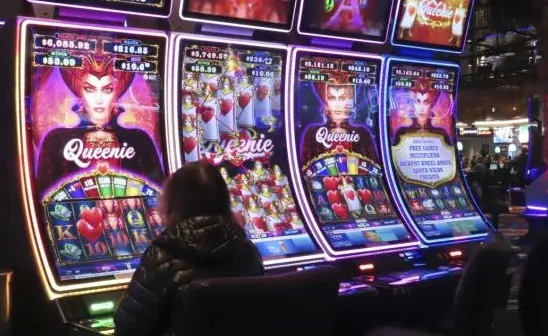
Macau floors are a nightmare for visible-spectrum capture. Chandeliers blow out highlights, slot machine screens cast colored bounce light, and the constant foot traffic creates motion blur that destroys feature point extraction. This is why every serious biometric surveillance system in the territory runs an infrared fallback. When the RGB pipeline returns a confidence score below 0.60, the IR array kicks in and re-captures. If the IR capture also lands in the ambiguous zone — say 0.68 to 0.74 — the system does not discard it. It escalates to a human operator with a thumbnail and a red flag. That escalation is the alert you feel on your neck.

Behavioral Pairing and the Real Trigger
Here is what the brochures never say: modern deployments pair facial match output with behavioral telemetry. A face that scores 0.71 similarity to a watchlist entry is background noise. A face that scores 0.71 while the same subject is exhibiting structured betting patterns near a specific cage window is a priority alert. The fusion layer weights the facial score against transaction velocity, dwell time at tables, and chip movement. When those vectors align, the system does not wait for a 0.82 threshold — it fires at 0.65. That is the trigger nobody talks about, and it is the one that catches the most people off guard. 🚨
The hardware does not care about your innocence. It cares about the distance between your embedding and the nearest template, multiplied by the contextual weight of whatever you are doing at that exact second. Get sloppy with your angle, stand too long at the wrong window, and the math will do the rest.