Fan Tan Kwok Bet Position: Does Seat Matter?
Seat position in Fan Tan is not cosmetic. It is a mechanical lever that decides how much information you receive before the Kwok bet is locked, and most players bleed money because they sit in the wrong chair and never realize the house edge is eating them from a blind angle. 💀
The Kwok bet is the single most misunderstood wager on the Fan Tan felt. It pays when the final count matches a specific remainder, and the payout structure is deceptively flat. What changes is not the odds on the felt—those are fixed by the house—but the timing and quality of the information you can legally extract before committing chips. That is where seat position becomes a weapon or a coffin.
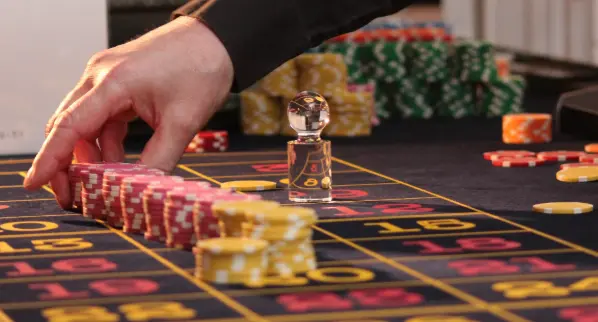
The Physical Geometry of the Fan Tan Table
A standard Fan Tan layout seats players around a bowl and a counting tray. The dealer operates the croupier stick from one fixed edge. Players on the dealer's immediate left and right occupy what insiders call the sightline seats. Players at the far end sit in the dead zone.
Why does this matter for a Kwok bet? Because the Kwok wager resolves on the remainder count after the dealer removes four-button groups. The speed of the count, the rhythm of the stick, and the micro-pauses before the final group is revealed all carry information. A player in a sightline seat can observe the dealer's hand tension and the angle of the last button sweep. A player in the dead zone sees only the final result.
That asymmetry is not paranoia. It is hardware reality. The counting tray on most Asian-style Fan Tan tables is angled at roughly 12 degrees toward the dealer's dominant hand. Players seated within a 90-degree arc of that hand get a cleaner view of the button stack before the final removal. Outside that arc, the stack is partially occluded by the bowl rim. You are betting blind while thinking you are betting smart.

Algorithmic Reality: Why the House Loves the Dead Zone
Casino floor managers understand seat dynamics better than any player. That is why the dead zone seats are never roped off. They are bait. A player who sits in the dead zone and places a Kwok bet is essentially donating a fraction of a percent extra to the house on every resolved hand. Over 500 hands, that fraction compounds into a real bleeding wound.
Do the math. If the base house edge on Kwok is 2.3 percent, and dead-zone seating adds an effective 0.4 percent penalty through mistimed entries and misread counts, you are playing at 2.7 percent. That is a 17 percent relative increase in expected loss. No betting system on earth can outrun that leak. 🎯
The algorithmic truth is brutal: Fan Tan is a game of complete information after the count, but incomplete information before it. Seat position determines whether you are on the complete side or the incomplete side of that wall.
Which Seats Actually Give You an Edge
Forget superstition. The only seats that matter are the ones with an unobstructed line to the counting tray and the dealer's stick hand. On a standard oval table, those are positions two, three, six, and seven, counting clockwise from the dealer's left. Positions one and eight are too close—you get a bad angle on the far side of the tray. Positions four and five are the dead zone.
If you cannot get a sightline seat, do not place a Kwok bet at all. Sit out the round. Play the Fan or the Nim instead, where the information asymmetry is smaller. A disciplined player who refuses to bet blind will outperform a reckless player who bets every hand from the worst seat in the house.
One more hardware detail: some tables have a raised lip on the far edge of the tray. That lip is supposed to prevent button spillage, but it also blocks the view of the final group from the dead zone. If you see that lip, you know exactly where the house wants you to sit. Do not cooperate. 💰
The Kwok Position Trap in Online and Live-Streamed Formats
Online Fan Tan removes physical seat geometry but replaces it with camera angle geometry. A single fixed camera above the tray creates a new dead zone: the bottom-left corner of the screen, where the last button group is often clipped by the video frame. Players who bet Kwok based on that clipped view are making the same mistake as the dead-zone player in a live casino.
Live-streamed tables with multiple camera angles are better, but only if you manually switch to the overhead feed before the final count. The default feed is almost always the dealer's face angle, which is useless for reading the tray. Switch the camera, or switch the bet. There is no middle ground.
Seat position in Fan Tan Kwok betting is not a myth. It is a measurable information advantage that translates directly into expected value. Sit in the sightline. Bet the count you can actually see. Refuse the dead zone. The felt does not care about your feelings, and the house will happily take your money from the blind seat until the tray runs dry.